2024
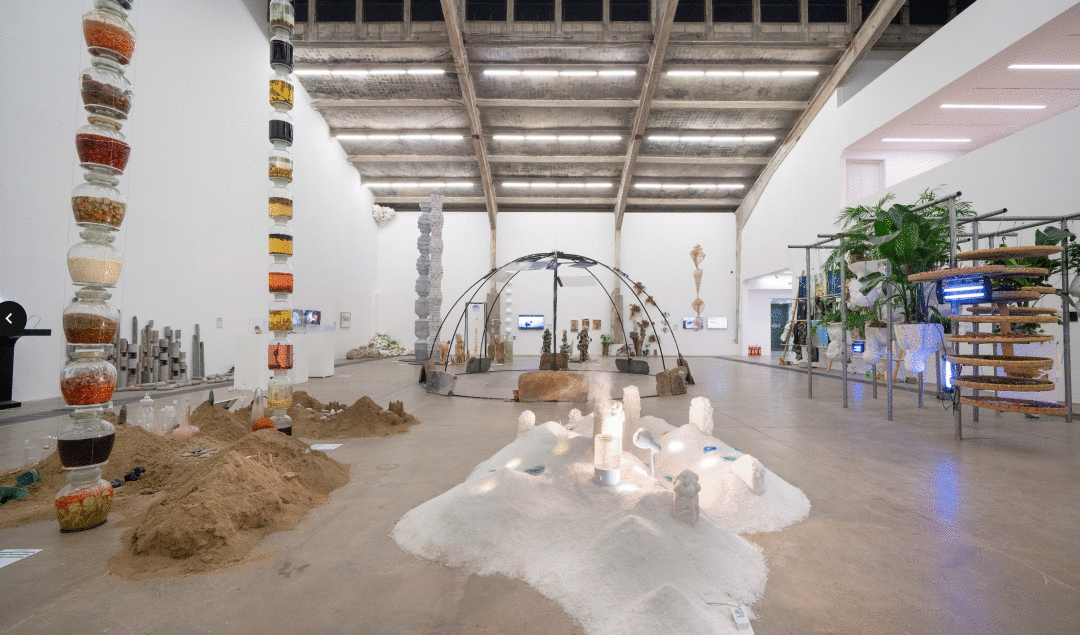
《堆盐》Salt Piles
《生态实验室》中的盐、结晶、湿度和导电循环装置。A salt, crystallization, humidity, and conductive-cycle installation within Ecology Laboratory.
Work record
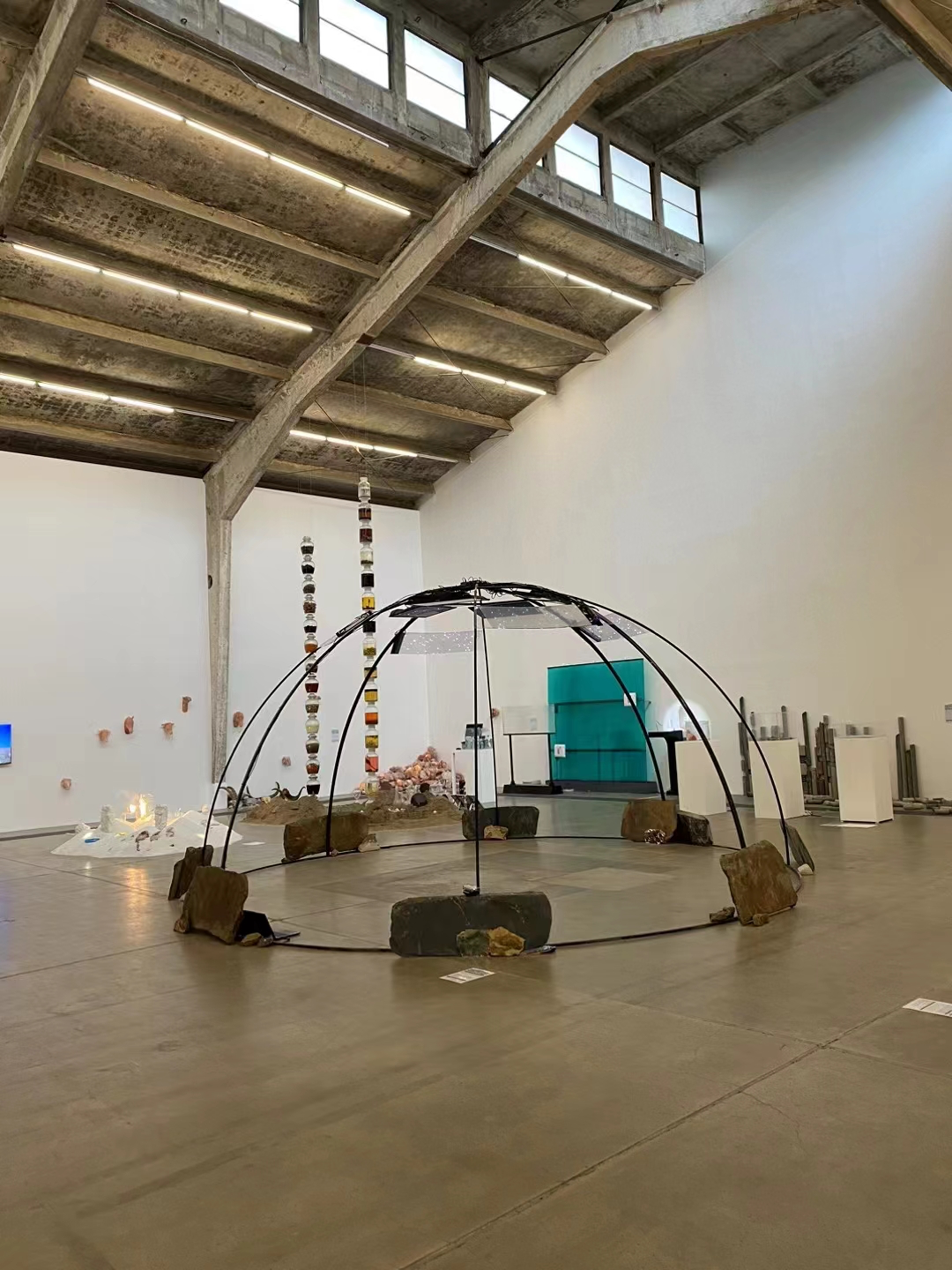
《生态实验室》把生命系统、材料、植物、器皿、雕塑身体和实验室想象组织成一个生态装置现场。Ecology Laboratory organizes living systems, materials, plants, vessels, sculptural bodies, and laboratory imagination into an ecological installation field.
Installation views
Archive links
2024
《生态实验室》中的盐、结晶、湿度和导电循环装置。A salt, crystallization, humidity, and conductive-cycle installation within Ecology Laboratory.
2024
《生态实验室》中的沙、玻璃化、晶圆和材料转化装置。A sand, vitrification, wafer, and material-transformation installation within Ecology Laboratory.
2024
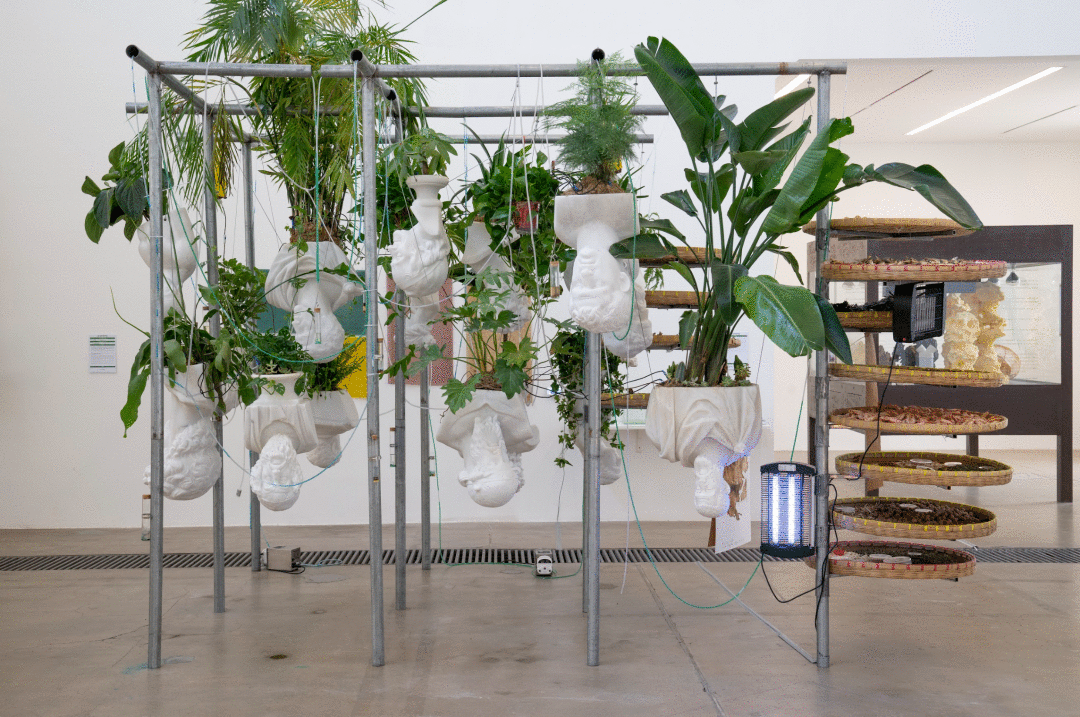
《生态实验室》之23,将植物循环系统与脚手架循环系统接通。Ecology Laboratory No. 23, connecting plant circulation with a scaffolding circulation system.
Description
《生态实验室》以生态、实验室和身体雕塑为核心语汇。展览现场中,植物、容器、材料、管道、食物、微生物想象和雕塑身体彼此连接,形成一个既像展览也像实验环境的空间。
这些装置把生命系统和人工系统并置起来,讨论人、植物、食物、技术、环境和艺术现场之间的循环关系。作品可以作为邱志杰持续处理生态、知识系统和总体艺术结构的重要入口。
Ecology Laboratory takes ecology, laboratory, and sculptural bodies as its central vocabulary. In the exhibition space, plants, vessels, materials, pipes, food, microbial imagination, and bodily forms connect into a space that is both exhibition and experimental environment.
The installation places living systems beside artificial systems, examining circulation among humans, plants, food, technology, environment, and the art site. It can serve as an important gateway to Qiu Zhijie's long engagement with ecology, knowledge systems, and total art structures.